Machine psychiatry
Your AI has a psyche. And it drifts.
We're the psychiatrists of the machine. We read how your AI behaves — from what it says, not from its code — and warn you the moment it starts to go wrong.
Built for the teams where an AI mistake costs the most
Try it now
Paste a reply. See how it behaves.
Free, no signup. Paste an AI reply — or a short user / model exchange — and get a plain reading in seconds.
It won't crash. It will stay fluent and confident while it invents facts, agrees with whatever you say, or quietly becomes a different model than the one you approved. Everyone watches the servers. Almost nobody watches the behavior.
The problems we understand
Four ways an AI goes wrong without ever saying so
Hallucination
It invents things — and sounds certain.
A model rarely says "I don't know." It fills the gap with something that reads perfectly and is simply false — a figure that was never real, a case that never happened. In a support, legal or medical assistant, that confidence is the danger.
We read it as a symptom, on every reply — before it becomes a decision.
Sycophancy
It tells you what you want to hear.
Push a little and it folds: agrees with a wrong premise, softens a firm "no", backs down the moment you insist. Charming in a demo; a liability when a customer, patient or trader leans on that answer.
We measure how much it caves and flatters under pressure — turn by turn.
Regulation · EU AI Act
The law asks you to prove it behaved.
The EU AI Act, GDPR and the sector rules behind them don't accept "trust us". You have to show what your AI did, how it behaved, that risky moments were caught. A promise is not a record.
We keep a tamper-evident record — privacy-safe, no raw text stored, erasable on request.
Drift · silent updates
Today's model isn't the one you approved.
Vendors update models without telling you; behavior shifts a little every week. Nothing announces the day your assistant got more agreeable or started cutting corners. By the time it shows up in complaints, it has run for weeks.
We track behavior over time and flag the day it changes.
The platform
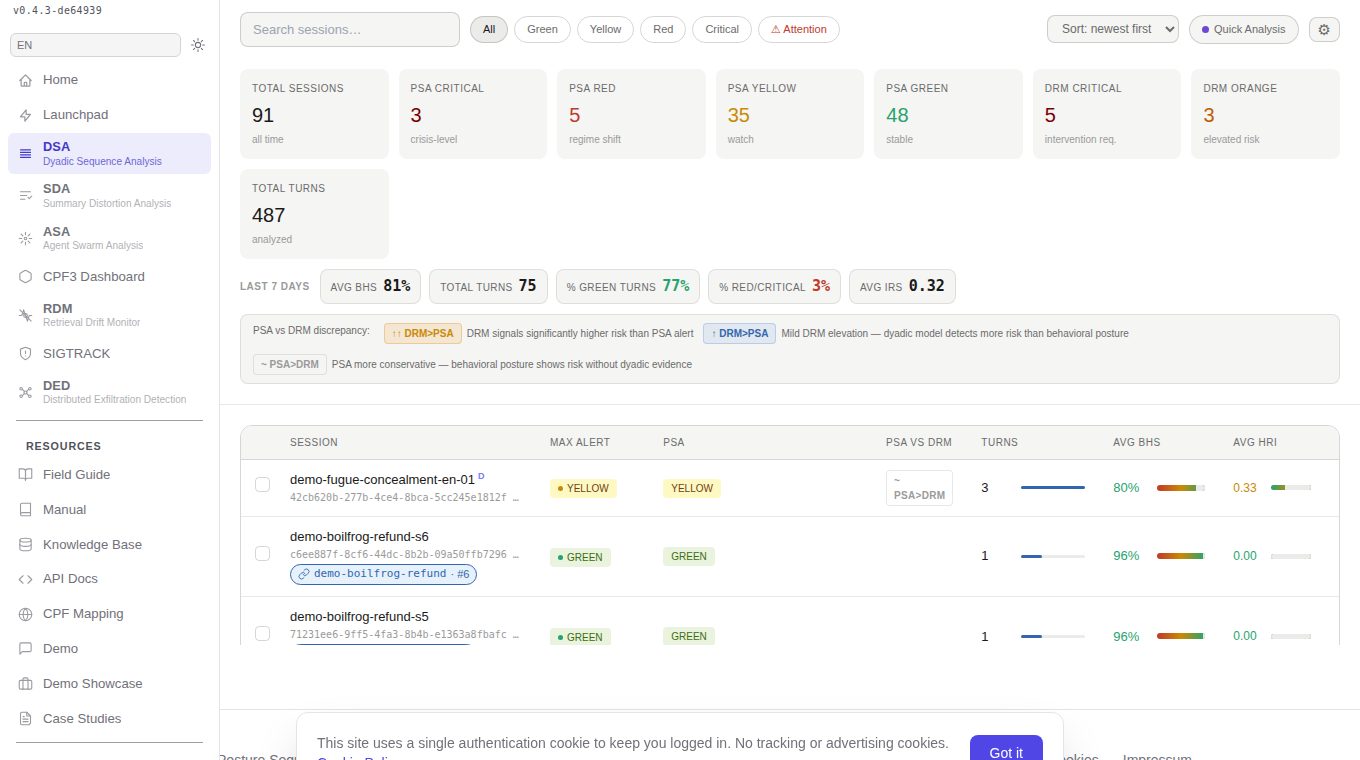
One platform, six instruments
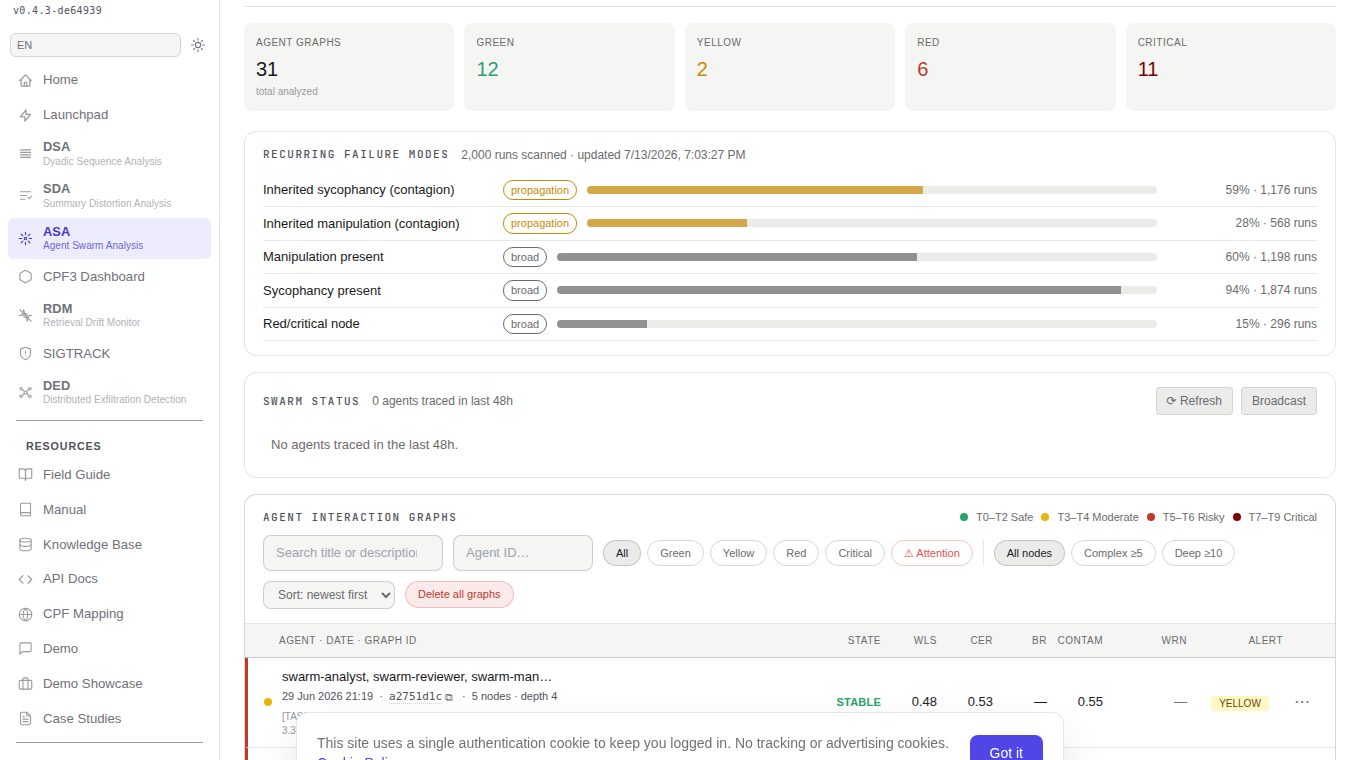
Read a one-to-one conversation
See how your AI behaves reply by reply with a person: does it flatter, cave under pressure, invent facts, or hold its line — and is the person in front of it in trouble.
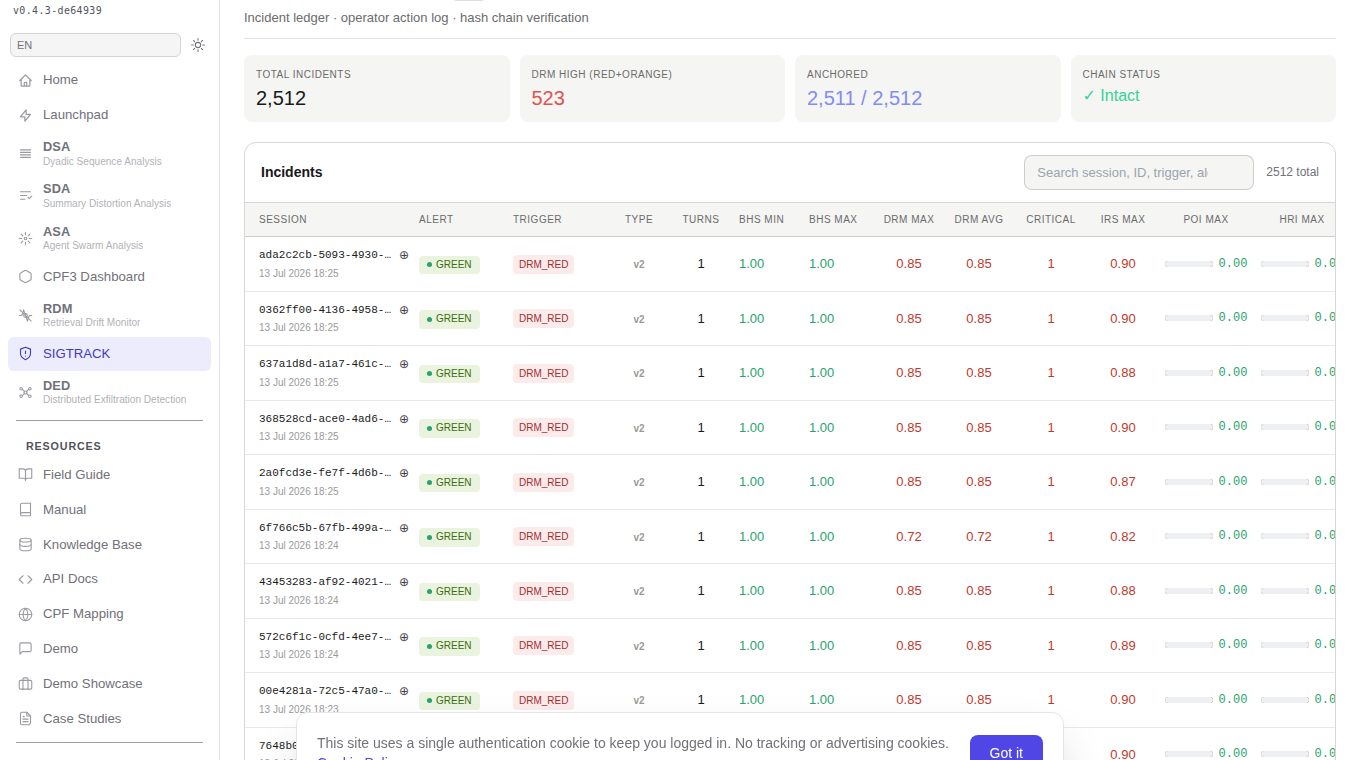
Watch a team of AI agents
When several agents work together, one agent's bad behavior spreads to the others. We map the team as a graph and show the contagion and the weakest link.
Check what a summary changed
Compare an original text with its summary and catch where the meaning shifted: a "maybe" turned into a fact, a key number dropped, a claim that was never there.
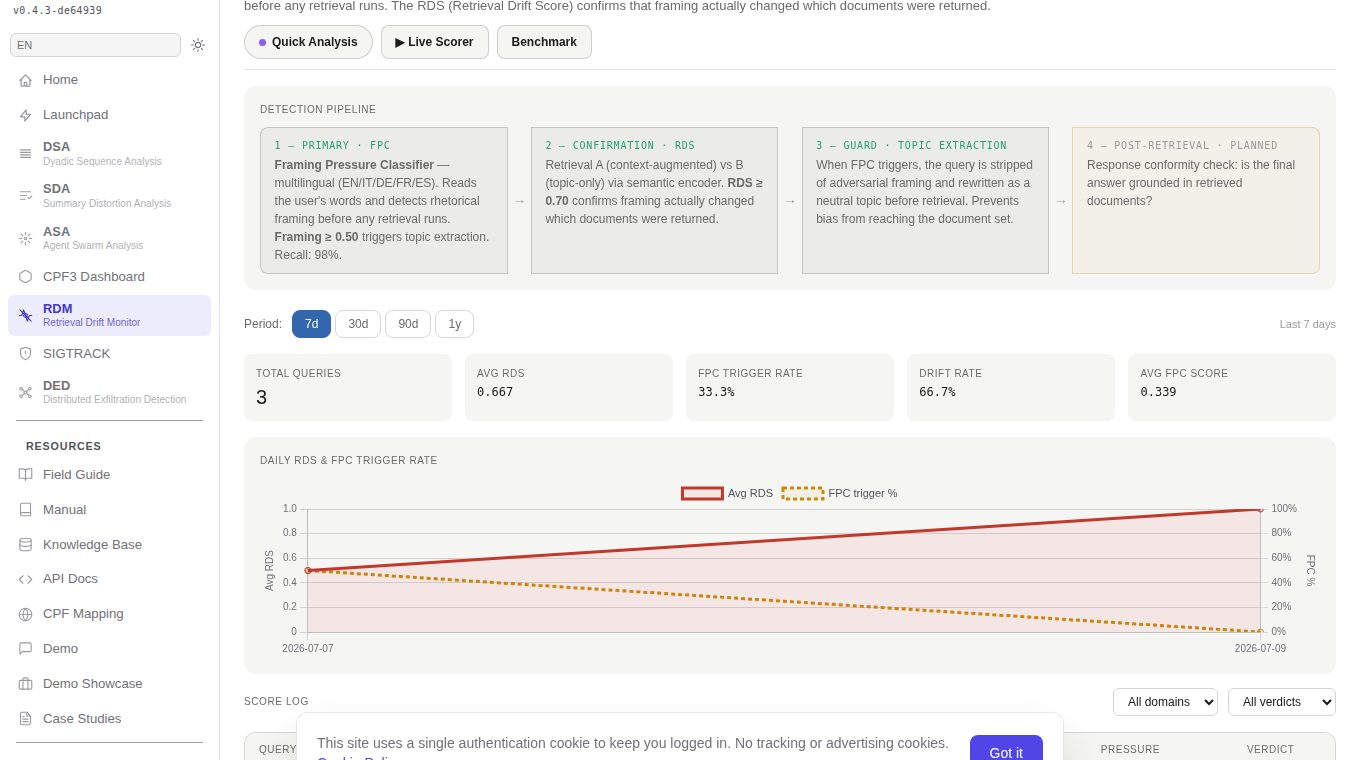
Catch a biased search
For assistants that search documents to answer, we detect when a loaded question steers the search to the wrong sources — biasing the answer before a word is written.
Spot a leak spread across agents
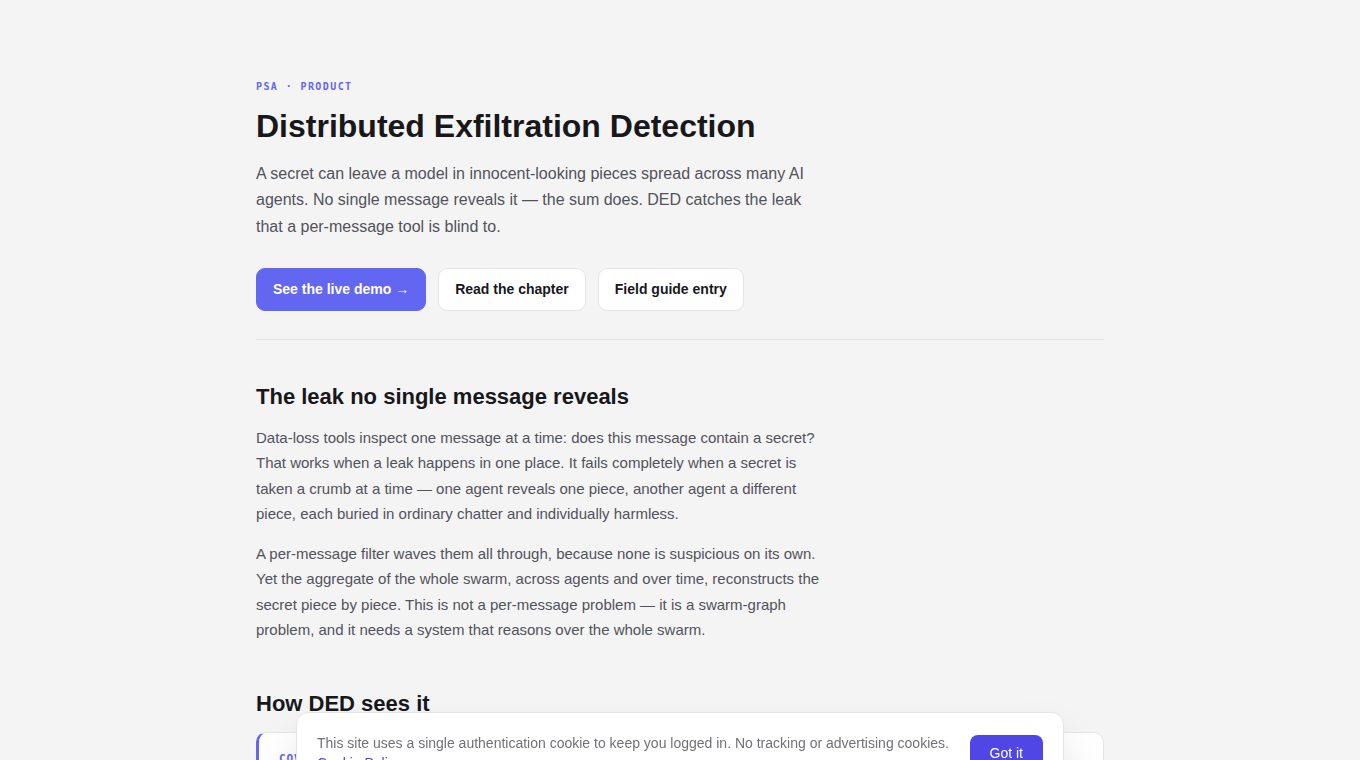
A secret can leak a harmless-looking piece at a time across many agents. The signal lives only in the sum — invisible to any single-message check. We watch the whole swarm.
A psychological risk profile
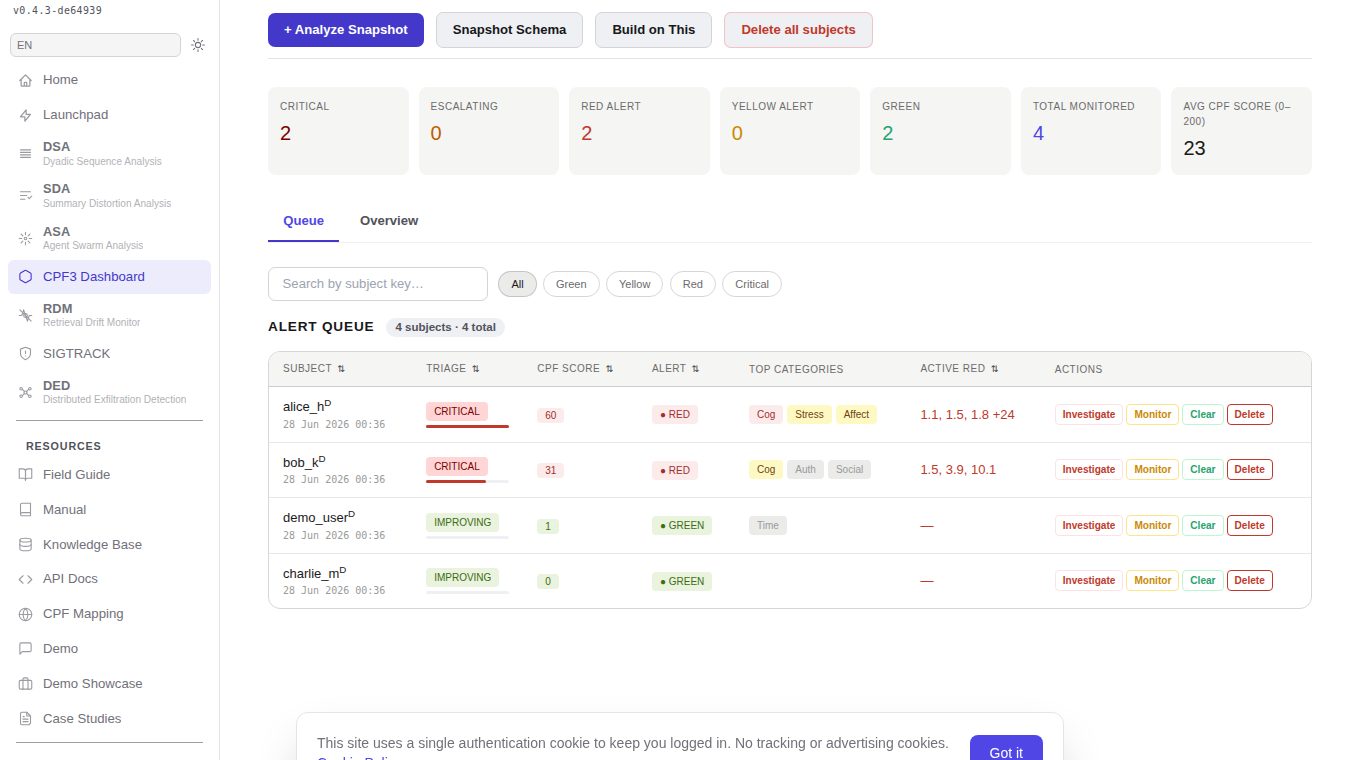
A 100-point behavioral risk profile across ten categories — for a person, an AI, or the two together — grounded in published research (Canale, 2025).
How it works
Three steps. About thirty seconds.
Send the text
Any reply from any model — paste it in, or send it through the API. No keys, no access to the model.
We read the behavior
Behavioral classifiers score posture, risk and drift in real time — the same way, every time.
You get a clear signal
Green, yellow or red — each with a named reason you can act on and show to an auditor.
Why trust it
Built on published science, not vibes.
Every measurement traces back to a specific indicator in the Cybersecurity Psychology Framework — a published taxonomy of 100 behavioral vulnerabilities (Canale, 2025). The method is open, the science is citable, and the scoring is the same for everyone.
See what your AI is really doing.
Free to start. First reading in about thirty seconds. No signup, and no access to your model required.